

Don’t they need something stronger? How the most powerful interventions can be the simplest.
There’s a point many young people reach; sometimes gradually, sometimes all at once, when they realise something doesn’t feel right inside.
Their mood is low, their motivation has disappeared, or things feel overwhelming. For parents watching this happen, it can be frightening, confusing, and heartbreaking in equal measure.
In those moments, it’s completely understandable that teens, and the adults who care about them, look for something strong enough to match how strong the struggle feels.
That ‘something stronger’ may be a diagnosis, medication, or a formal mental health intervention.
Not because anyone is overreacting, but because medical language gives shape to what feels chaotic.
It validates that something is genuinely wrong. It reassures kids that their distress is real and deserving of help. It also offers parents a sense of direction when they feel powerless.
But here’s the part we don’t talk about enough: even when medical support is needed- and sometimes it absolutely is- it can’t do the heavy lifting alone.
For many young people with early or milder mental health difficulties, the foundation of feeling better isn’t found in a prescription or a referral. It’s found in the quieter, less glamorous, often underestimated world of wellbeing and lifestyle.
For teens, these things can sound ‘wishy‑washy’. When you feel awful, being told to sleep more, eat regularly, or get outside can feel like adults aren’t taking you seriously. It can feel like you’re being brushed off with something too simple for how complicated everything feels.
For parents, suggesting lifestyle changes can feel too small, too slow, or too uncertain when your child is struggling. You want to do something, and you want it to work.
But the truth is far more powerful, and far more hopeful….
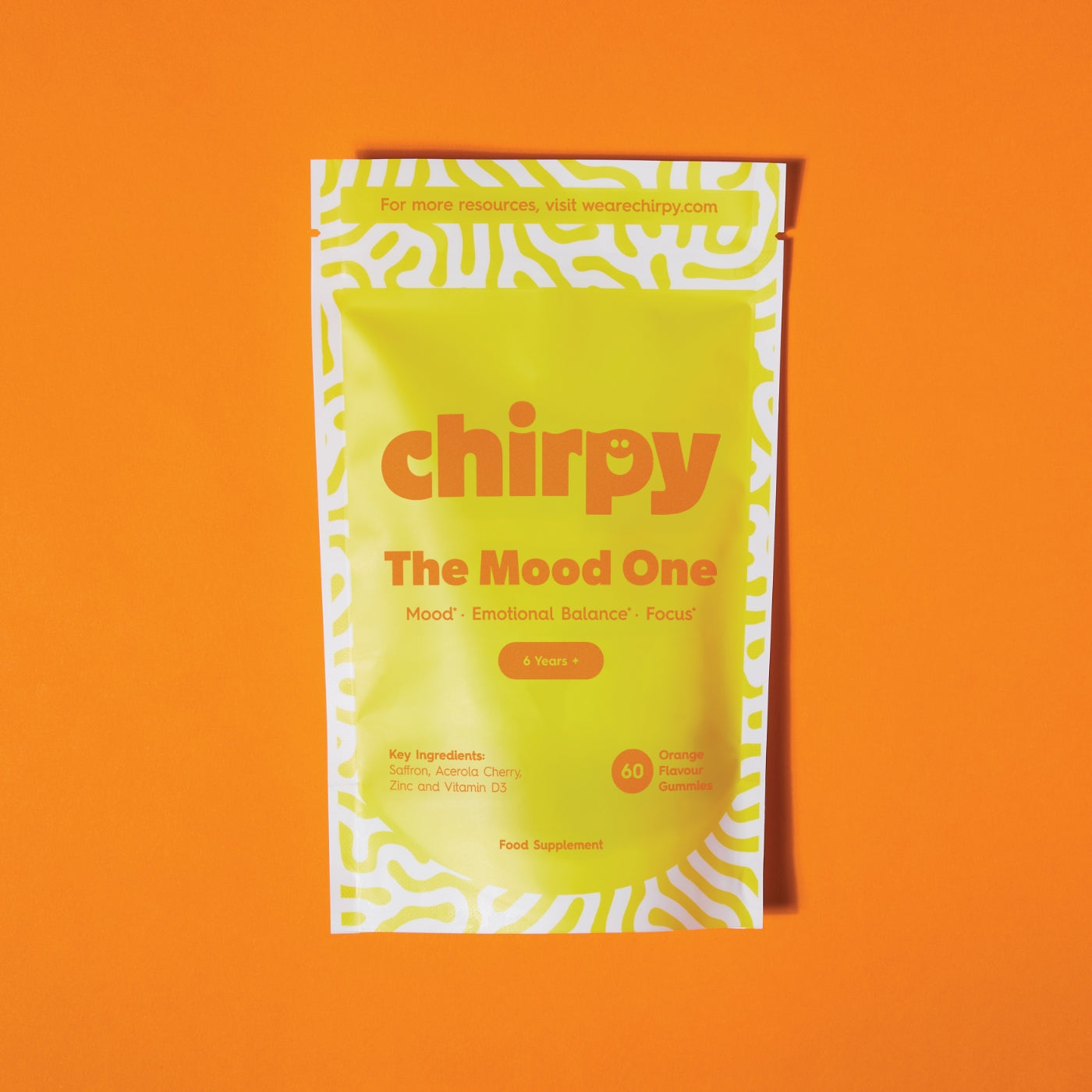
Good sleep, nourishing food, supplements like Chirpy, movement, meaningful connection, creativity, joy, rest, routine, and time away from constant digital noise are not soft, optional extras. They are the biological and psychological foundations of emotional stability. They are the conditions under which the brain can regulate, recover, and respond to any other support a young person might need.
Think of it like tending to soil. You can buy the most expensive fertiliser in the world, but if the soil is dry, depleted, or never sees sunlight, nothing will grow. Medical interventions- therapy, medication, specialist input- are the fertiliser. They can be transformative. But they only work when the soil is cared for.
And for many teens, tending to the soil is the intervention.
It’s the teenager who realises that staying up until 3am scrolling is fuelling their anxiety.
It’s the young person who discovers that eating regularly steadies their mood more than they expected.
It’s the teen who reconnects with a hobby they loved as a child and feels something spark again.
It’s the shift from isolation to belonging, joining a club, talking to a trusted adult, spending time with someone who makes them laugh.
It’s the tiny, unglamorous, daily choices that slowly rebuild a sense of self.
None of this minimises distress. None of it suggests that teens should ‘fix it themselves’ or that parents should simply wait and hope. Quite the opposite. It acknowledges that the feelings are real, valid, and deserving of support, and that the strongest support often begins with the basics.
So when you think, ‘We need something stronger,’ the answer isn’t to dismiss that instinct. It’s to widen the definition of what ‘stronger’ can mean. Stronger can be medication. Stronger can be therapy. But stronger can also be sleep, nourishment, connection, movement, creativity, boundaries, rest, and joy.
Stronger is anything that helps a young person feel more like themselves again.
Sometimes, the strongest things are the simplest ones.